
Kinetic LED Supply Scope · 8 min read
Complete kinetic LED system or motion structure only?
The cheaper-looking quotation is often just a smaller scope. Compare who owns the display, mechanics, controls, testing and site interfaces before comparing totals.
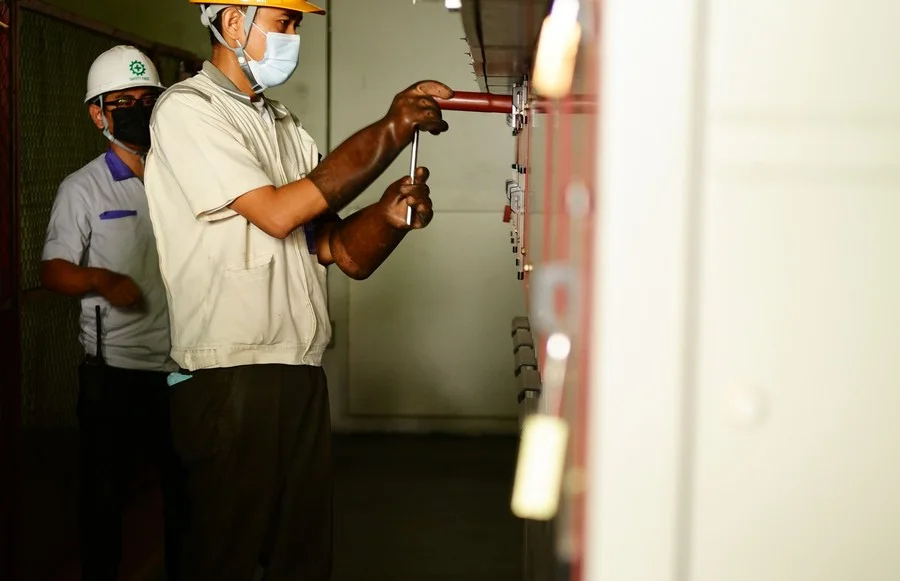
“Can you quote the mechanism only?” is a normal request from an LED manufacturer. “Can you deliver everything ready to power on?” is equally normal from a brand or venue. Problems begin when both requests are described as a quotation for the same kinetic LED screen.
There are three workable supply routes. None is universally better. The right one depends on the capability already inside the buyer’s project team and on where the buyer wants responsibility to sit when something does not align.
Choose a complete system when one boundary matters most
A complete supply coordinates the visible LED display, moving structure, motion controls, defined operator interface, packing and factory test as one package. It suits buyers who do not already have an LED manufacturing partner or who want fewer commercial interfaces.
Joeqing’s foldable lifting family is a straightforward example: the LED, folding and lifting mechanism, wheeled base and flight case are developed as one portable product. Standard diagonal sizes are 108, 135, 158 and 163 inches. The buyer still confirms the display and input specification, but the mechanical interface is no longer split across companies.
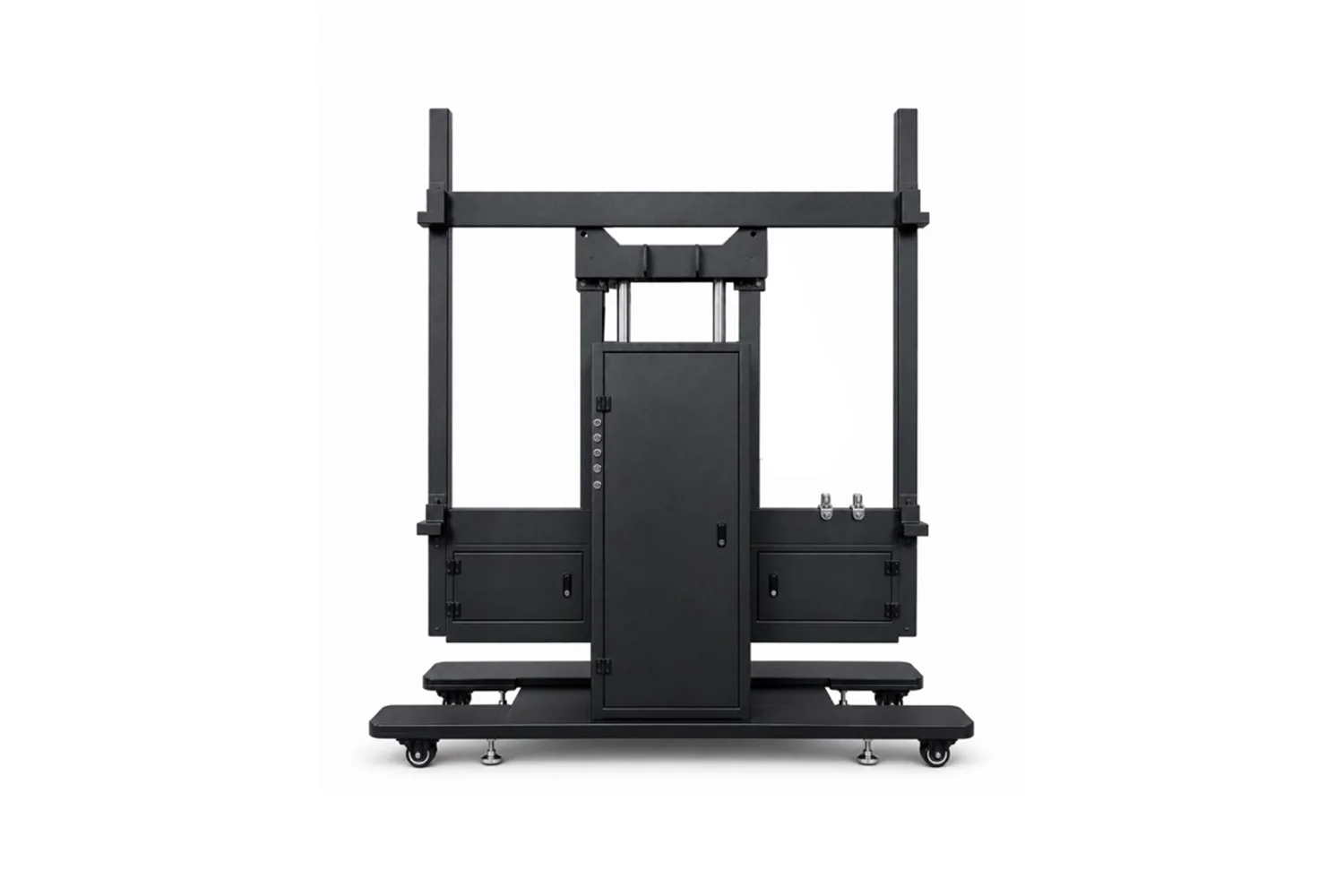
Choose structure or motion only when the display scope is already owned
An LED manufacturer may already have a cabinet platform, processor standard, service policy and regional approvals. In that case it is sensible to keep the display in-house and buy the moving structure, drives and motion control as an engineered subsystem.
This route is not a shortcut around integration. It requires a proper interface schedule: overall screen dimensions, cabinet grid, moving mass, centre of gravity, mounting pattern, permitted deflection, cable entry, service access and the tolerance between the display and structure. A late change in cabinet weight can change the drive selection; a late change in maintenance route can make the finished assembly impossible to service.
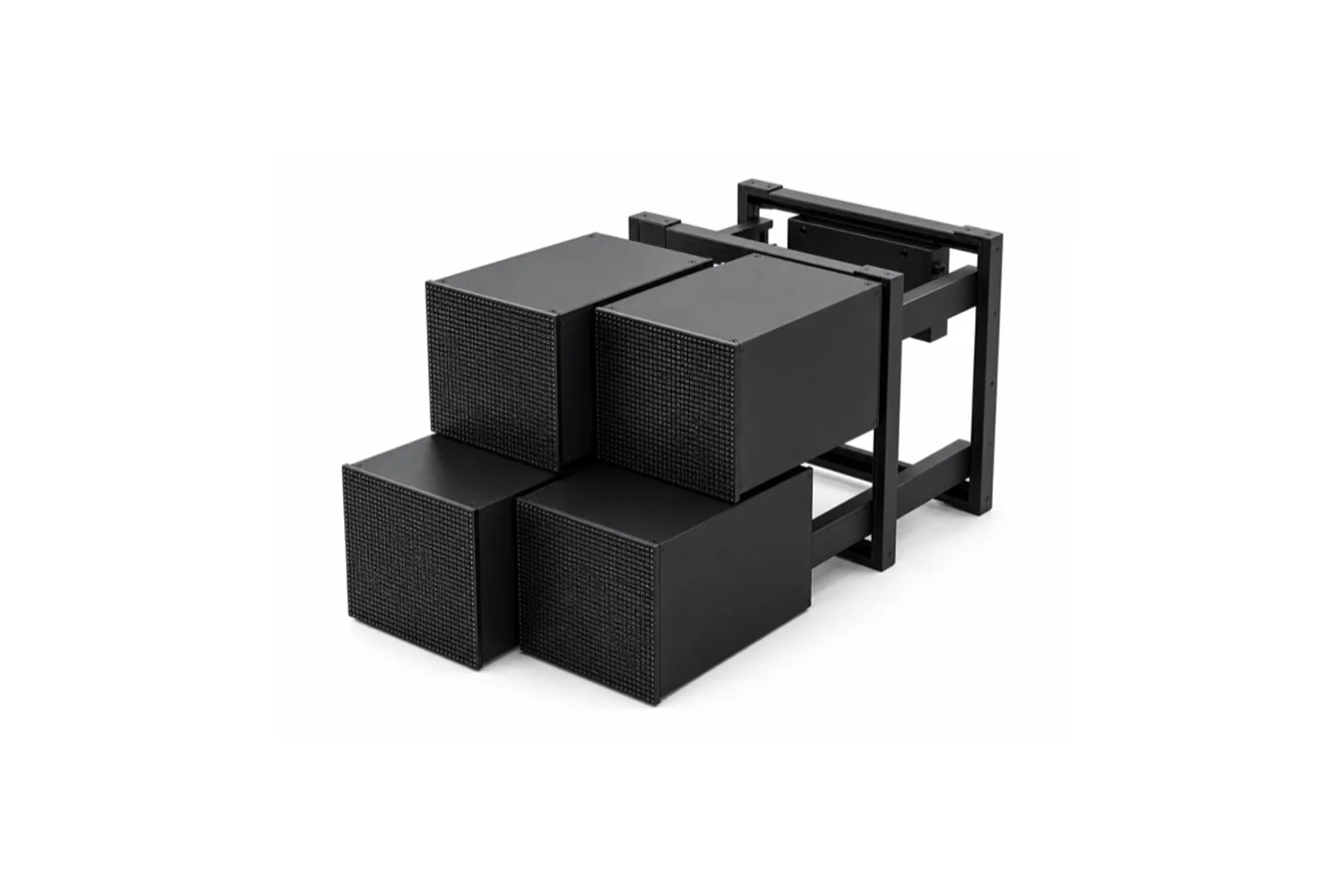
Choose a fully customized route when the standard model is close—but not enough
A project can begin from a standard family and still require custom engineering. Changes to size, layer count, shape, colour, display technology, motion behaviour or installation interface usually propagate into the structure, drive, control, packing and test plan.
At this point, a “standard unit plus options” price becomes misleading. The better commercial structure is a defined engineering phase followed by a project quotation based on approved inputs.
Compare the three routes side by side
| Scope | Best fit | Main buyer responsibility |
|---|---|---|
| Complete system | Venue, brand, rental company or integrator wanting one coordinated package | Site structure, utilities, local installation boundary and content |
| Motion structure + control | LED manufacturer or AV integrator with an established display platform | LED performance, cabinet interface, processor and display service |
| Bespoke development | Architectural or experience-led concept outside standard motion families | Concept approval, site inputs and staged design decisions |
Where split scopes most often fail
- Weight: the display becomes heavier after the drive and structure have been selected.
- Mounting: cabinet fixing points do not match the moving frame or cannot be reached during installation.
- Cables: bend radius and moving loops are treated as an afterthought.
- Control: media cues, motion commands and emergency-stop ownership are mixed together.
- Testing: each supplier tests its own part, but nobody demonstrates the combined operating sequence.
Questions to put in every request
- Who supplies the LED display or visible surface?
- Who supplies the servo drives and motion controller?
- Who integrates media or show-control cues?
- Who designs the site support and foundation?
- What will be assembled and tested before shipment?
- Who commissions the system on site?
Ask each bidder to state exclusions directly underneath the included scope. That single page often reveals more than a long feature list and makes quotations far easier to compare.
Not sure which supply route fits?
Choose “Not sure yet” in the inquiry form and describe what your team already owns.