
Custom Dynamic Art
Custom LED Display Manufacturer for Bespoke Kinetic Work
A project-entry route for kinetic flip walls, rotating LED spheres and one-off non-planar installations. We define the load path, drive method, control logic, display or surface interface and installation boundary around the concept.
Visual References
One-off motion concepts, grounded in real visual direction.
Use these reference images to start the conversation around geometry, surface, motion and the engineering boundary.
Three Starting Families
Choose the closest behavior—not a fixed model.
These are engineering routes, not catalogue specifications. Final dimensions, module count, speed, load, finish and control interface are defined by the approved project brief.
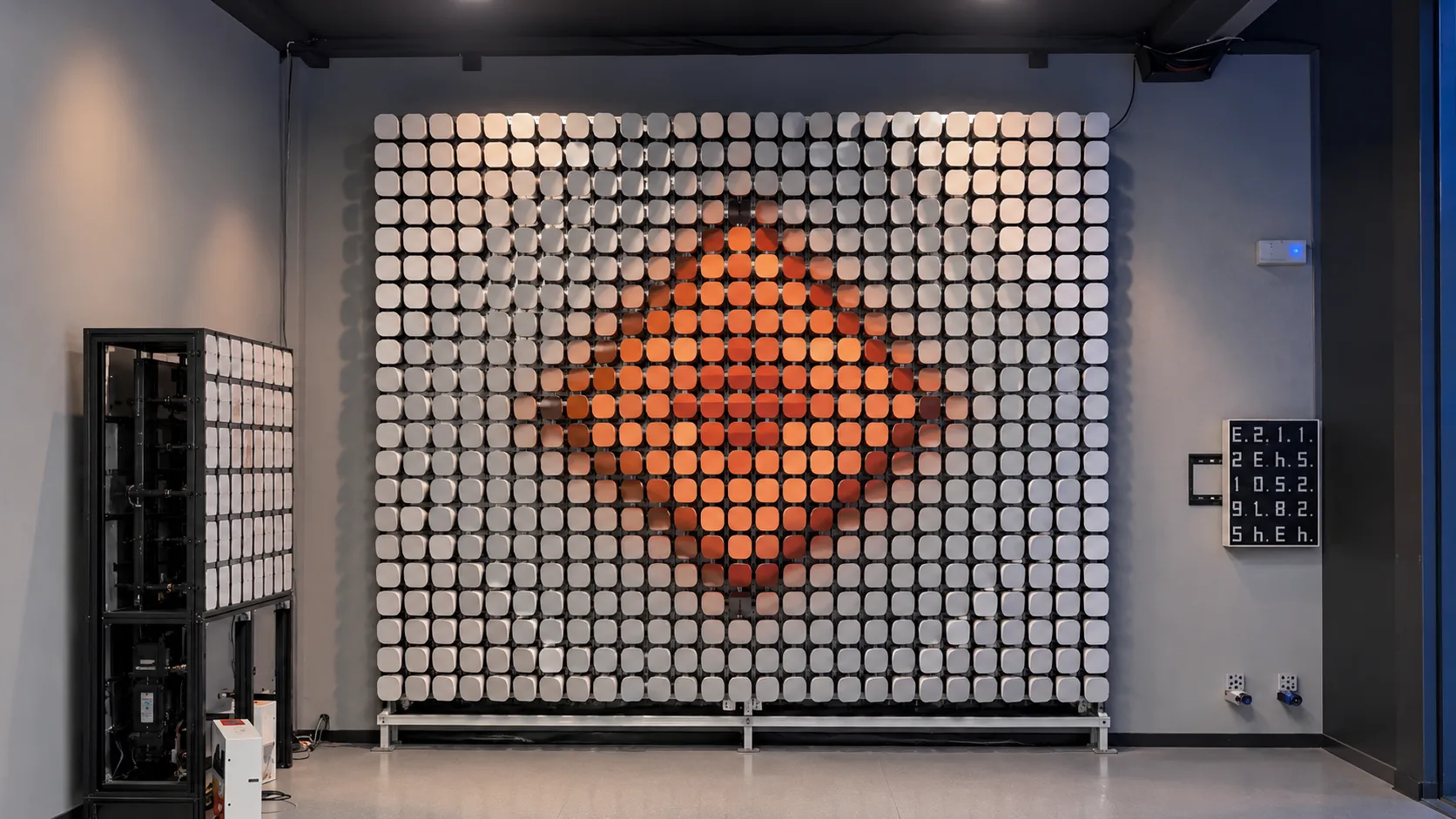
Transform a wall through synchronized panels.
Independent or grouped elements rotate between visual states to reveal colour, graphics, reflection or depth. At small disc sizes this is what the trade calls a flip dot display or flip disc wall: each element is a two-sided tile driven to one face or the other, so the wall renders an image mechanically rather than by emitting light. At larger panel sizes the same principle becomes an architectural flip wall. The mechanism is developed around panel geometry, viewing distance, service access and the required sequence.
- Architectural façades and interior feature walls
- Brand reveals and programmable patterns
- Printed, reflective, illuminated or mixed surfaces
Build motion around a non-planar LED object.
A custom rotating sphere or spherical LED assembly requires coordinated structural support, power and signal transfer, balance, service access and safety logic. The LED solution and mechanical route are reviewed together.
- Brand landmarks and immersive installations
- Continuous or indexed rotation
- Custom diameter, support and surface system
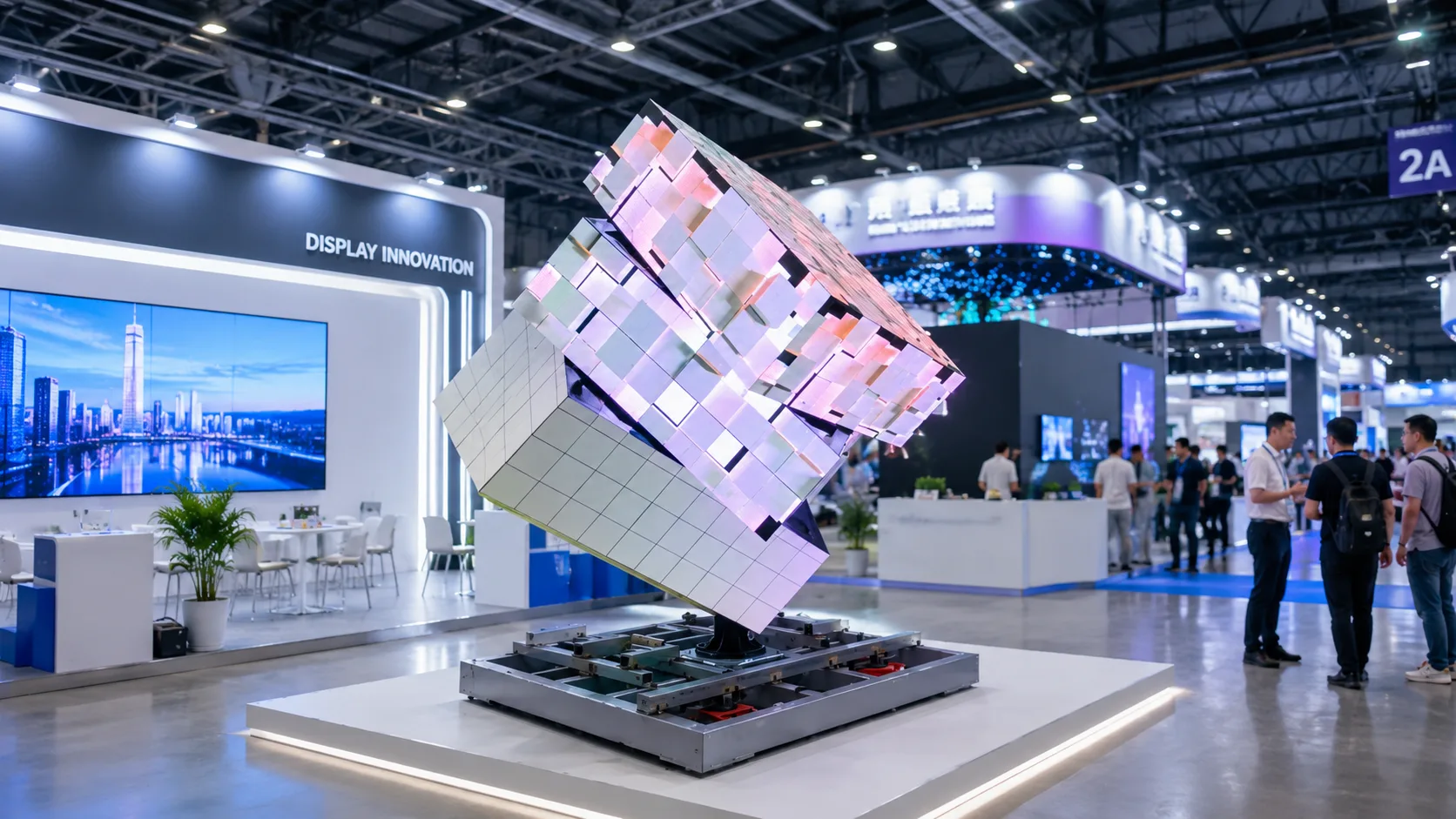
Turn a solid volume into a moving surface.
An LED display cube reads as one object from every approach angle, which is why it works on an exhibition floor or in an atrium where there is no single front. Rotation on a motorised base is the simple version; driving individual face tiles in and out turns the same cube into a relief surface that changes silhouette as it turns. Balance, the power and signal path through the rotating joint, and service access are what decide the build.
- Exhibition stands, atriums and brand landmarks
- Continuous rotation or indexed positions
- Flat faces, extending tiles or mixed surface treatment
Supply Route
Three ways to start the engineering conversation.
Choose the boundary that matches your team. Joeqing will confirm what can be standardized, what must be customized and which interfaces remain with other suppliers.
Motion structure
Mechanical structure, drives, limits and control for an LED manufacturer or integrator supplying the visible surface.
Complete system
Motion structure, control and display or finish coordinated as one project-defined package.
Concept development
Begin with reference images, sketches or a target effect when the mechanism and supply boundary are still open.
Project Inputs
What we need before the first recommendation.
A complete technical package is not required. Clear reference material and a realistic site boundary are enough for the first review.
Have a concept image but no specification?
Send the reference, approximate scale, project city and target date. Engineering response within 8 business hours.
Bespoke and creative LED display questions
When should a project go bespoke instead of using a standard platform?
Use a standard platform when the motion you need already exists as a product — folding and lifting, multi-layer rotation, a telescopic matrix, a sliding rail or a hoist. Go bespoke when the geometry is non-planar, the surface is not a flat LED wall, or the motion has to follow a path no catalogue system performs. A flip wall and a rotating LED sphere are the two most common starting families.
Can you supply only the mechanics and control system for a creative LED display?
Yes. Supply scope is either mechanical plus control, or a complete engineered system. Many creative LED display projects arrive with the LED solution already chosen by the client or their integrator, so we engineer the load path, drive method, control logic and the interface to that surface, and leave the display supply with your team.
What surfaces can a bespoke kinetic installation use?
LED is the most common, but it is not the only option. The moving surface can be LED, reflective, printed, architectural cladding or project-defined. The mechanism is developed around panel geometry, viewing distance, service access and the required sequence rather than around a fixed panel type.
What do you need before you can quote a bespoke project?
A concept direction and the site boundary. Technical values — dimensions, module count, speed, load, finish and control interface — are confirmed after concept and site review, not before. These are engineering routes rather than catalogue specifications, so the approved project brief is what fixes the numbers.
What kind of motion can be programmed?
Rotation, indexing, synchronized sequences or a custom path. On a flip wall, independent or grouped elements rotate between visual states to reveal colour, graphics, reflection or depth. On a rotating sphere the work is coordinated structural support, power and signal transfer, balance, service access and safety logic.
What is a flip dot display, and can you build one at architectural scale?
A flip dot display is a mechanical screen: every pixel is a small two-sided disc, magnetically driven to show one face or the other, so the image is formed by moving parts instead of by light. It reads well in daylight, draws power only when it changes state, and has a physical sound and texture that an LED wall cannot reproduce. Scale is a mechanical question rather than a display one — disc size, element count, drive current and service access are what set the limit, so a flip disc wall is engineered around the geometry and the viewing distance of the specific site.
Can a bespoke installation combine LED with mechanics that are not screens at all?
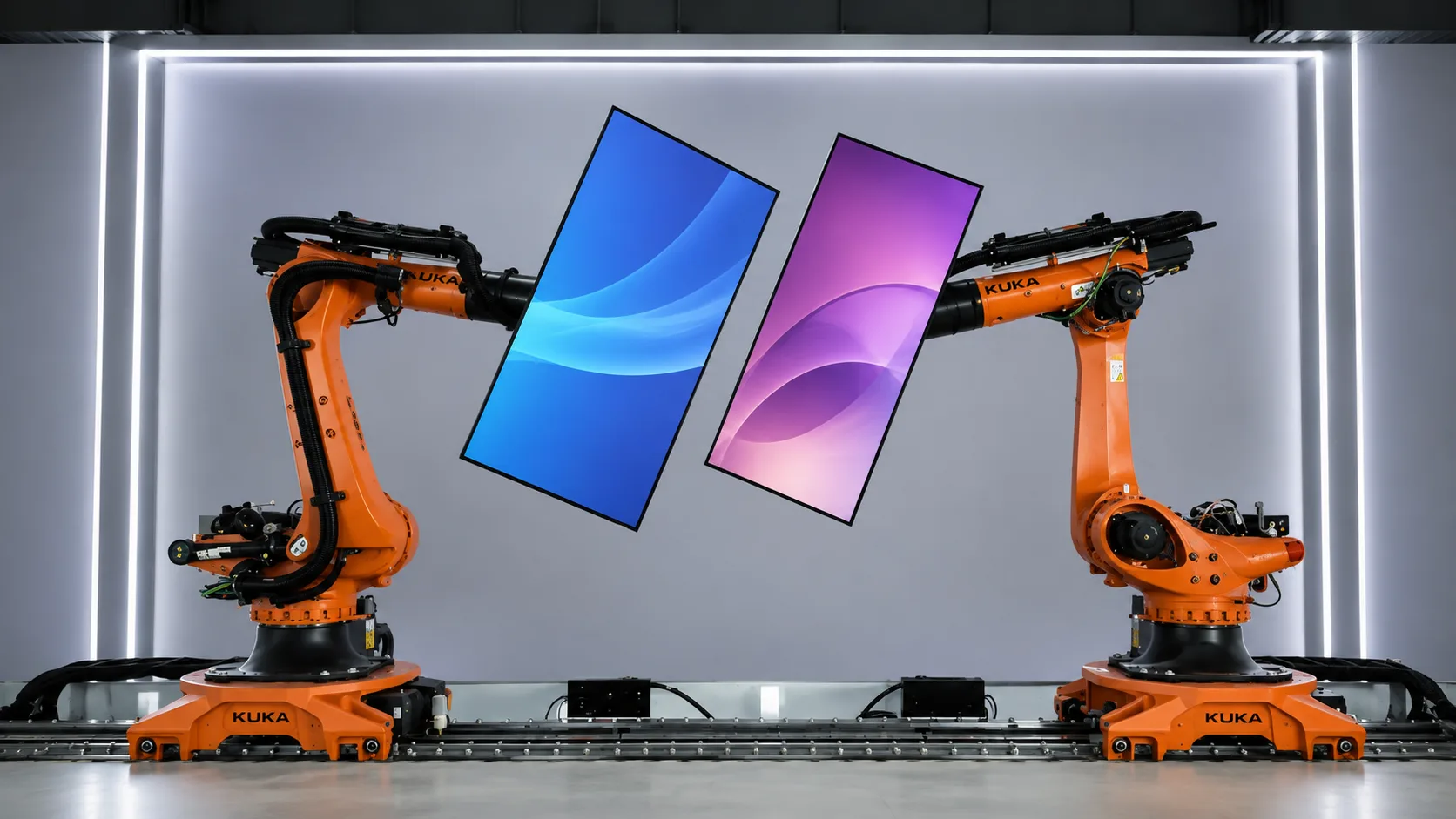
That is most of what this route covers. A rotating LED display cube, a flip disc surface, panels carried on robot arms or a mixed wall of lit and unlit tiles are all the same engineering problem in different shapes: a load path, a drive method, a control sequence and an interface to whatever the visible surface turns out to be. We engineer the motion side and either supply the display with it or leave that scope with your integrator.
If your project is closer to an existing system, start from the foldable lifting screen, the multi-layer rotating screen, the telescopic matrix or the outdoor rotating landmark — all seven are compared on the motion platforms page. To size a surface and the load it puts on the structure, use the LED wall calculator.