
Kinetic LED Quotation Checklist · 8 min read
What to send for a kinetic LED wall quotation.
You do not need a finished specification. You do need enough facts to stop suppliers from pricing different projects under the same title.

Two requests may both say “5 × 3 m kinetic LED wall” while describing entirely different jobs. One buyer expects LED, structure, controls and commissioning. Another already owns the LED and only needs a telescopic mechanism. If the supplier fills those gaps with assumptions, the resulting prices will not be comparable.
A good request for quotation is not a long document. It is a short list of decisions, known values and clearly labelled unknowns.
The seven inputs that make a first quotation useful
Project location and environment
Give the city, indoor or outdoor use, installation height and expected exposure to heat, dust, water or wind. “Outdoor” alone does not describe a sheltered courtyard and an exposed rooftop equally.
Visible size and available depth
State the target width and height, closest viewing distance and the physical space behind or around the display. Include a marked-up photo or section drawing if available.
Moving object and estimated load
Say whether the complete screen, independent modules, layers or another object moves. Provide estimated mass, centre of gravity and mounting points when known.
Motion behaviour
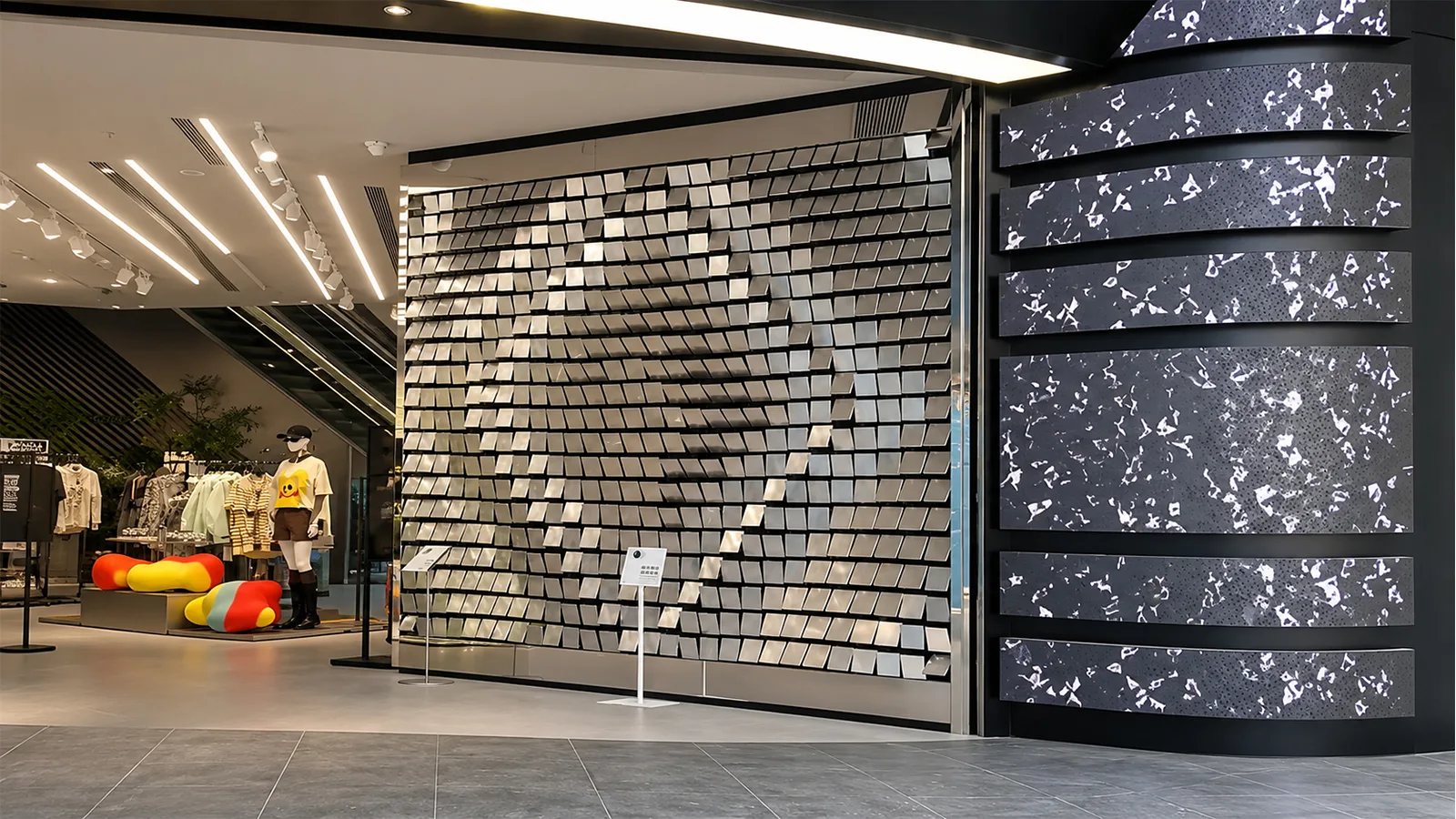
Describe the path with verbs—lift, fold, rotate, extend, slide or open. Add travel, angle, speed and number of axes. Link a reference video and identify the exact movement to copy.
Supply scope
Choose complete system, motion structure plus control, or bespoke development. List anything your team will supply, especially LED cabinets, processors, media servers and site steel.
Control and content boundary
Name the party responsible for playback, show cues, sensors and content mapping. If a specific interface or timecode is required, state it as a requirement rather than an assumption.
Delivery and programme
Give the destination, required commissioning date, access restrictions, local installation capability and any packing limits. A target date without site readiness information is not yet a programme.
What can remain unknown at the first stage
You do not need to select the motor, gearbox or controller. You may not know the final pixel pitch, module size or installation method. Those can remain open if the design intent and site boundary are clear enough for an engineer to propose options.
Mark unknown items explicitly. For example: “Screen mass to be confirmed by our LED supplier; use 1,200 kg as a preliminary design load.” This tells every bidder how to price the current stage and what must be checked later.
Ask for assumptions and exclusions beside the price
A quotation should identify the design inputs used, what is included, what is excluded and which items remain provisional. Without that page, a lower total may simply omit structure, cabling, media integration, commissioning or local installation.
Request a revision number and validity date. Kinetic projects change quickly during concept development; a clear revision trail prevents an early sketch from being mistaken for the final scope.
What happens after submission
Joeqing reviews the likely motion family, missing inputs and supply route. The first response may be a recommendation, a short clarification list or two budget routes with different boundaries. Confirmed dimensions, performance values and responsibilities belong in the quotation and subsequent engineering documents—not in a casual chat message.
Ready to define the boundary?
Engineering response within 8 business hours.