
Telescopic Kinetic LED Guide · 9 min read
Indoor vs. outdoor telescopic kinetic LED walls.
Outdoor is not an indoor matrix with a weatherproof cover. Module scale, travel, drainage, structure and maintenance all change.

The first visual question is usually “How deep can the wave travel?” The first engineering question should be “Where will the system live?” A 300 mm indoor matrix and a 600 mm outdoor landmark are not two sizes of the same product. Their viewing distance, moving mass, service route and environmental boundary are different from the start.
Joeqing currently uses five reference platforms as starting points—three indoor and two outdoor. Final dimensions remain project-specific, but the comparison is useful for choosing the right scale before detailed engineering begins.
Indoor platforms prioritize visual density and controlled access
The indoor platforms use nominal 128 × 128 mm, 160 × 160 mm and 250 × 250 mm moving modules. Smaller modules create a denser physical surface and support closer viewing; larger modules reduce the number of axes and can make sense at greater screen sizes.
Reference indoor travel is 200–300 mm. That may sound modest beside a 600 mm outdoor system, but at a short viewing distance the shadow, parallax and change of surface angle are already strong. More travel also demands more rear depth and longer moving cable paths.
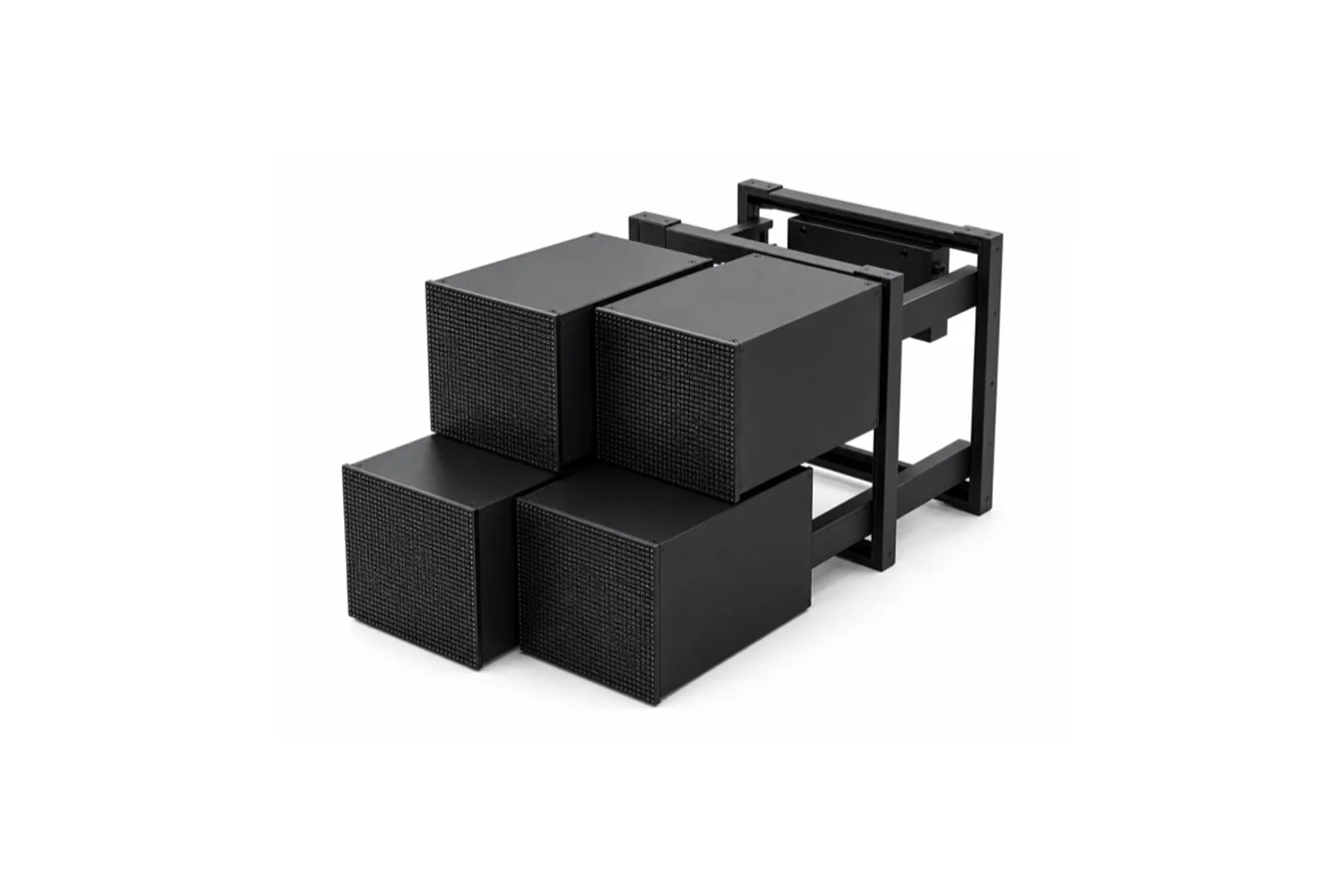
Outdoor platforms prioritize travel, structure and service conditions
The outdoor references use 320 × 320 mm and approximately 495 × 495 mm modules, with travel up to 400 mm and 600 mm. Larger moving faces read better from a plaza or roadside distance and reduce the axis count per square metre.
The extra travel is only part of the change. Outdoor design must account for drainage, corrosion protection, solar heat, dust, wind exposure, moving cable protection, rear access and the structure that transfers loads into the building or foundation. The open and closed positions may also present different wind profiles.
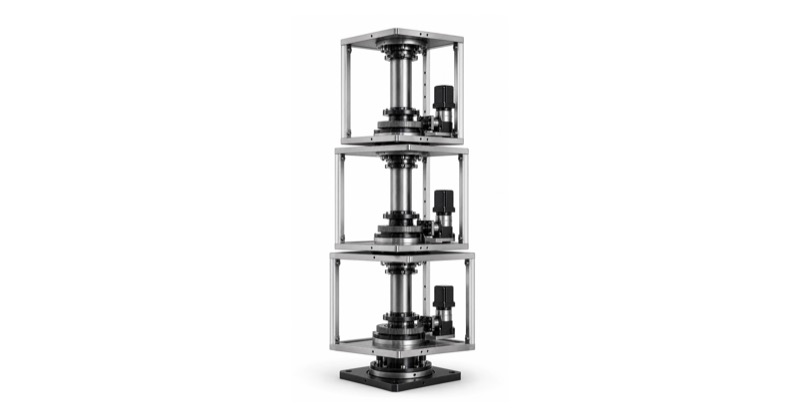
Five reference starting points
Indoor precision · 128 × 128 mm · 300 mm travel · P1.78 / P1.56 · front maintenance
Indoor touring · 160 × 160 mm · 200 mm travel · P1.98 · front maintenance
Indoor large format · 250 × 250 mm · 200 mm travel · P1.56–P3.91 · rear maintenance
Outdoor · 320 × 320 mm · 400 mm travel · P2.5 · rear maintenance
Outdoor landmark · approx. 495 × 495 mm · 600 mm travel · rear maintenance
The selection trade-offs buyers actually feel
| Decision | Indoor tendency | Outdoor tendency |
|---|---|---|
| Viewing distance | Close; finer visual and physical density | Long; larger moving faces |
| Travel | 200–300 mm reference range | 400–600 mm reference range |
| Maintenance | Front or rear depending on platform | Usually rear with a planned service zone |
| Structure | Wall/floor interface and acoustic control | Wind, drainage, corrosion and site support |
| Content | Fine gradients, text and close-range depth | Large shapes and motion readable from distance |
Do not forget the closed position
Concept renders usually show the wall at maximum depth. Maintenance teams live with the closed position. Check the remaining ventilation, module access, cable clearance and the route for replacing a drive or LED face when every module is home.
Also decide whether a single stopped axis may remain in place while the rest of the surface returns home. That fault behaviour affects the control strategy and the way content should respond.
Select from the site boundary backward
Start with the closest viewing distance, overall screen size, desired relief, installation depth and service access. Then choose the module platform and pixel pitch together. A smaller module is not automatically “better”; it increases the moving-axis count, control density and maintenance points.
For a useful first review, send the wall width and height, project city, indoor/outdoor condition, closest audience distance, desired travel and a section drawing showing the space behind the finished surface.
Have a target screen size and travel?
Send the environment, pixel pitch, maintenance route and structural depth.